Hungary
Introduction and Pioneering History of Hungary
Hungary was the first country in the former communist bloc to open the Iron Curtain, opening the door to missions in the Eastern Bloc, and was used as a mission outpost for communist countries. Hungary is located in Central Europe and is a country with a population of 10 million people. Budapest has a population of about 1.8 million people. Religion is 65% Catholic and Protestant (Calvinism, Luther) about 30%.
I. History of Hungary
Hungary is a country conquered by the Magyars in Central Asia in 896. By the way, the name of Hungary comes from the Huns. The country of the Huns is Hungary in English. The Huns are known as the Xiongnu in Asia. The home of the Xiongnu is Mongolia. The Xiongnu people in Mongolia came to Europe around the 5th century, and Europeans called them the Huns. The Huns ruled Western Europe, Germany, northern France, and Eastern Europe for about 100 years. The leader at that time was Attila. They failed to Europeanize and eventually collapsed around the 6th century. Now the Hungarians are called Magyars. Magyar Hungarians come from Asia in 896. The Magyars of Hungary are a nomadic people originating from the south of the Ural Mountains (Central Asia ~ the Ural area), who migrated west around the 9th century and settled in the Carpathian Basin (present-day Hungary) around 895. They belong to the Uralic language group, and they are a union of seven tribes that interacted with the Huns and others and became the basis of the Hungarian state. The Magyars were a nomadic people who were good at riding horses and fighting, and they were a horseback people. The Magyars came to Europe and lived by plundering in the early days. The early Magyars plundered from Greece in the east to Germany, France, Spain, Rome, and the Netherlands in Northern Europe. And it was pushed out by European Catholic countries and helped them settle on Hungarian soil now. Hungary Europeanized and adopted Christianity in order to survive in Europe. Since the Christian kingdom was born in 1000 AD, it has a Christian culture like Europe, and has survived as a European country for 1100 years to this day.
In the 13th century, it was invaded by Batu Khan, the grandson of Genghis Khan of Mongolia, and ruled for one year. In the 15th century, it was invaded by the Ottoman Turks and ruled for more than 150 years. And the 12 countries of the European Catholic Alliance fight against the Ottoman Empire, the Islamic culture, in Hungary and liberate Hungary. The joy of liberation was short-lived, and soon Austria ruled for more than 150 years. In 1867, the Austro-Hungarian Empire was born through the 'Great Compromise' (Ausgleich). This was the period of prosperity, and the territory of Hungary at that time was Hungary, Slovakia, one-third of Romania, part of Ukraine, one-half of Serbia, two-thirds of Croatia, Slovakia, and part of Austria. And when Austria ignited the fire of World War I, it participated in the Axis powers with Austria, but became a defeated country and was reduced to 30% of the current territory. After the First World War, Hungary became an independent country. In World War II, it sided with Germany, the main Axis power, in order to regain the territory it lost during World War I, and then turned back to the Allies. This led to the German invasion. At that time, the Soviet Union occupied Hungary and Eastern Europe, and Hungary entered the communist era from 1945 ~ early 1989. And in 2004, Hungary joined the EU. Hungary, which came to Europe from Asia, maintained its national identity under the invasion of this nation for 1,100 years and developed a strong national consciousness.
II. Hungarian Culture and Economy
1) Education: Above all, Hungary is a country where education has blossomed in the midst of these invasions and trials of foreign peoples. Hungary is a nation with a high enthusiasm for education like Korea, and it is a country that has produced many world-class scholars. There are four official Hungarian Nobel laureates, but there are 20 Hungarians who received the Nobel Prize due to exile and immigration during World War I and II. They are 5 Nobel Prizes in Chemistry, 5 Nobel Prizes in Medicine, 3 Nobel Prizes in Physics, 3 Nobel Prizes in Economics, 2 Nobel Peace Prizes, and 2 Nobel Prizes in Literature. Vitamin C, which we often eat, was also discovered by Hungarians and won the Nobel Prize. In 2019, during the corona era, he won the Nobel Prize for making the Pfizer vaccine. In 2025, there was one more Nobel Prize in Literature.
Currently, Budapest is mainly home to Semelweiss Medical University, Buda University of Technology, Budapest University of Economics, and Elte University of Humanities. Semelweiss Medical School still has many international students. Ignaz
Semmelweis (1818~1865) is called the patron saint of mothers. He is a professor of obstetrics and gynecology who has studied the causes of infant mortality and thus reduced infant mortality. He is a Hungarian obstetrician and gynecologist who was the first to discover the importance of "hand sanitization" and saved the lives of countless mothers, and a pioneer in modern infection control. This has made the Hungarian Medical University and the Semevais Medical School world-famous. Hungary has some of the most prestigious ophthalmologists, dentists in the world. Since last year, more than 15 Korean international students have come to study abroad at Hungarian medical schools every year. Currently, there are about 500 Korean medical students and international students. The College of Engineering and the College of Economics are universities that are competitive in the world. It is especially strong in chemistry, medicine, and pharmacy. Hungary has been nurturing many talented people through genius education since elementary school. Budapest currently has more than 100,000 university students.
2) Music: Hungary is a country of music. Music education in Hungary has a great impact on the world. There were many national musicians in Hungary. These include Ferenc Erkel, the father of Hungarian music, Bartók Béla, folk musician Bartók Béla, Hungarian music educator Zoltán Kodály, and world piano virtuoso Ferenc Liszt (franc). We know Liszt Franz well because he is so famous. He has several nicknames. Representatives of Romantic music, founder of symphonic poetry, emperor of the piano, Paganini of the piano, the first idol musician in Europe, etc. However, the hero and pride of Hungary is Zoltan Kodaly. He is a Hungarian music educator and a world-renowned music educator. He is a composer, national musician, conductor and national educator. He was the one who studied Hungarian folk music and applied it to music education, leading to the emergence of the world-class Kodai teaching method. Today, his music teaching methods and music education philosophy have had a great influence on music education not only in Hungary but also around the world.
Even now, music educators from all over the world are flocking to Hungary to learn Zoltan Kodai's music teaching methods. His philosophy of music education is implied in a word: "Music belongs to everyone." He said that music should belong to everyone, not to a few upper-class aristocrats. He said, "The voice is the simplest instrument that heaven has given to everyone," and that anyone can enjoy music. In particular, his Kodai teaching method has a good impact on national education around the world in that it enriches human life, plays a role in character growth, and teaches people to perceive that it is a social and national book through music. As for the Korean anthem, Ahn Ik-tae, who composed the national anthem, studied music with Zoltan Kodai for three years in Budapest from 1938 to 1941 on a scholarship from the Hungarian national anthem. Due to Zoltan Koda's music education, he has been teaching music in kindergarten since he was 3 years old in Hungary, and music theory and folk music in elementary school. Anyone who wants can learn one instrument for free from elementary to middle school. This history has continued to this day, and Hungary has become a country of music with a high level of musical culture.
3) Economy: Hungary has good land. 85% of the country is plain. In addition, there are many hot springs in the Carpathian basin region. It is surrounded by mountain ranges in the east, west, south, and north. Because the land was good, the agricultural industry developed. It is an exporter of goose down and pork. And dietary supplements have developed. Today, it has become a manufacturing industry in European and Asian countries. Japan's Suzuki Automobile Factory and China's CATL Battery Factory have moved in. Korean manufacturing companies include Samsung Electronics, Samsung SDI, SK On, Hankook Tire, Ecopro, and Solus Advanced Materials. There are many of their partner companies. Celltrion is entering the pharmaceutical company. In particular, there are two automobile battery companies, so there are many Koreans. There are about 30 cooperation. Located in Central Europe, it is in the limelight as a manufacturing plant in Europe, along with the Czech Republic, Poland, and Slovakia.
III. Outposts of Missions in the Eastern Bloc (1989-2001)
After World War II, from 1945 to 1988, the world was in the era of the Cold War between the communist and capitalist camps. In 1989, Hungary was the first nation among the former communist countries to open the Iron Curtain. In 1985, Missionary Samuel proposed a prayer topic for UBF to hold a retreat in Russia within 10 years. At that time, in a communist country, it had been closed for more than 40 years by the Iron Curtain, so it was like a dream to hold a retreat in Russia. However, God heard our prayer and heard this prayer five years earlier. In order to fulfill this prayer, God began to open the doors of the former communist and Eastern Bloc countries in Hungary in 1989. Hungary was the first country in the former communist bloc to open the Iron Curtain and open it. Hungary removed 350 kilometers of barbed wire on the border between Austria and Hungary in May 1989. This was a turning point in world history. It was the moment when the Iron Curtain, which had been blocked for more than 40 years, collapsed, the wall of communist ideology collapsed, and the wall of the Cold War collapsed. Upon hearing this news, the East German people flocked to Hungary in large numbers to cross over to West Germany through Hungary. European countries held international rallies at their borders to force East German citizens to flee to West Germany. This meeting was called the "European Picnic" under the banner of the East and the West to discuss the future of Europe. On August 19, 1989, a European picnic rally was held in Pétervára Rákóczi, where the Hungarian-Austrian border crossing is located. At this time, more than 1,000 East Germans fled to Austria and achieved the purpose of the rally. After that, he escaped from East Germany through Hungary to Germany. On October 25, Hungary first gained independence from Soviet communism, and on November 9 of that year, the Berlin Wall finally fell. The European Picnic rally in Hungary played a decisive role in breaking down the East-West Berlin Wall. After that, East and West Germany were reunified, and Eastern Europe opened up one by one from communism. Subsequently, the door of the gospel was wide open to the communist countries.
God used Hungary to preach the gospel to the former communist world. In the early days of the opening of the communist bloc, Hungary served as an outpost not only in terms of missions, but also in all aspects of Eastern Bloc politics, economy, and social culture. Consular diplomacy between Korea and Hungary began in February 1989. In the early 1990s, hundreds of Korean students flocked to Budapest, Hungary, to study Russian, and when Russia opened up, they moved to Russia at once. At that time, in April 1989, Shepherd Heung-sik Kim (Missionary Paul Kim), who was working as a mathematics teacher at UBF, was looking for a way to become a missionary in Hungary. He heard the voices of the suffering souls beckoning around the Iron Curtain in the Eastern Bloc, "Come and help us." He was looking for a way to Hungary, writing letters to the Hungarian University of Economics (then Kalmax University). Then, I saw an advertisement in the daily sports newspaper recruiting international students from the Semelweiss Medical University in Hungary. Through this information, Rebecca Kim and Missionary Caleb Han (UBF in Petersburg) went to Hungary in September 1989 for the first time, and Missionary Paul Kim was sent to Hungary on October 10 for the second time. God used Hungary as an outpost for missions in the Eastern Bloc. Through Hungary, Moscow, St. Petersburg, Poland, Romania, Belarus, etc. were developed. Caleb Han in Petersburg and Peter Kim in Ukraine were all co-workers in Budapest, Hungary, and then applied for a Russian visa and entered Russia. Missionary David Kim (CMI) in Romania also pioneered Romania while serving as a missionary in Budapest.
When the wind of the Holy Spirit blew in the former communist countries and Russia, God used Hungary as a missionary outpost in the Eastern Bloc. He used Missionary Paul Kim (CMI), who was the head of the Hungarian branch at the time, very much. At that time, Missionary Paul Kim left his stable job as a mathematics teacher and went to Hungary, an unknown world where his future was not guaranteed. At that time, there were many missionary co-workers in Hungary. Missionary Paul Kim served them devotedly so that they would become pioneers in Russia and Eastern Europe through Hungary. In obedience to God's good sovereignty, he sent his co-workers as pioneers. I thank God for dedicating the family of Missionary Paul Kim to UBF in Hungary and the Eastern Bloc for 12 years from October 1989 to 2001.
IV. UBF's Missionary Succession and Pioneering History in Hungary (June 2002)
In God's great will and good sovereignty, Missionary Paul Kim became the head of the CMI in Hungary, and Missionaries Andrew and Sarah Kim, who were the UBF directors of the Federation of Yugoslavia (now Serbia) at the time, inherited the pioneering history of Hungary. Missionary Paul Kim generously supported the translation of Daily bread prepared while serving the history of UBF in the past for the pioneering history of UBF in Hungary.
The motivation for the missionary family of Andrew Kim to come from Serbia to Hungary as a missionary is as follows. Missionary Sara Kim went to Yugoslavia as a missionary in 1991, and Andrew Kim went to Yugoslavia as a missionary in January 1994 while forming a missionary family with him. After Sara Kim lived as a missionary in Yugoslavia for 10 years and Andrew Kim lived as a missionary for 8 and a half years, God moved their mission field to Hungary. In March 2002, Andrew Kim came to Korea via Hungary for his own business. It was then that he came to pray for a mission to Hungary in the prayer room at Budapest Airport. At this time, God gave him a vision of pioneering Hungary. The heat of the Hungarian pioneering vision did not go away on the plane. I wasn't sure if it was a vision from God. A few months later, I began to study the words, "And this gospel of the kingdom will be preached in the whole world as a testimony to all nations, and then the end will come." (Matthew 24:14). They came to pray not only for Serbia but also for the pioneering of all of Eastern Europe. At this time, when Andrew Kim first asked him what it was like to go out to pioneer Hungary, all the missionary co-workers applauded and prayed. Believing that this was God's will, he accepted him as a missionary in Budapest. Thus, the family of Missionaries Andrew Kim and Sara was entrusted to Missionary Daniel Koh as the UBF director in Serbia and came to Hungary in June 2002 to serve the Hungarian pioneering history.
In June 2002, Andrew Kim, Sarah Kim, and their two daughters, Grace Kim and Soman Nada Kim, set off for Hungary with only a dilapidated car, a laptop computer, and a Bible. At that time, his total wealth was ten thousand dollars. This had to pave the way for self-reliance in Hungary. At the time when the sisters were 6 years old, they cried a lot that they would not go to Hungary. It was so painful to break up with her friends. God rented a shabby house in Budapest with a small room and a living room. There was no living room, and the toilet was shared with the other house. That's where we started a homestay. When the traveler came, the family slept in one room, and the traveler slept in the large living room. The travelers took pity on us for living in shabby. Thus began the history of missionary pioneering in Hungary. The following year, we moved to a larger apartment. There were three rooms, and there were separate toilets and baths. Andrew Kim learned how to create a homestay website while learning computer machine language here. And learned to be a tourist guide. The following year, the family house and the homestay were separated. God made us grow little by little every year and laid the foundation for our settlement. After 4 years, we stopped homestay business and only worked as a guide he learned. In the early days, Andrew Kim lived as a guide to neighboring countries because there were not many travelers in Budapest. Then, around 2012, I was notified by the Hungarian government to leave Hungary within a month. They said they would not be able to give us a visa because the company's performance was low. I wrote an article saying that I would improve performance in the future, so I applied for a visa again and received a visa. And worked for a Korean company for two years to get permanent residency stably. By the time I received my permanent residency, the TV manufacturing industry became difficult and the company was closed. After obtaining permanent residency, he used his know-how again to start a travel business and become materially independent. In 2016, he prayed for material independence in Hungary without going abroad for a mission to Hungary. At this time, through the MyRealTrip travel platform, I have been self-reliant as a Budapest travel guide until now. In 2019, I obtained my certified travel guide certification and became a qualified tour guide. Since then, God has sent many Korean companies to Budapest, and Budapest has been promoted as a good travel destination and has sent many travelers. The pioneering history of UBF Hungary Mission has continued with this struggle for self-reliance. Thank God for guiding me to settle in Hungary.
V. Current status of UBF in Hungary (June 2002 - present 2026)
God also sent many missionary co-workers to Hungary so that they would not be lonely.
- In 2005, Joshua Cha and Anna Cha came to LG Electronics Hungary as expatriates and worked together in missionary work. After completing my expatriate period, they returned to Korea. After that, as an expatriate, they served also in various different countries.
-In September 2007, Maria Jwa (Jeju) came as a missionary. He is currently serving in the missionary history in Korea.
- On December 27, 2007, Josephine Chung (Chuncheon, real name: Ahn Su-jeong) came as a missionary. Josephine has been co-working in Hungary to this day and is dedicated. She is currently working at LG Electronics.
- In February 2015, James Kim came as a missionary and is currently working steadily at the Korean company Serveone and is working with the missionary history. He is receiving Sunday messenger training once a month.
- In July 2016, his wife, Naomi Kim, came as a missionary. She is serving Brother Richard.
- In 2021, Missionary Samuel Jo joined the company and is working at LG Electronics and serving English-speaking students. He is receiving Sunday messenger training once a month.
- In 2023, his wife, Rebekah, came as a missionary when they started a missionary family. Missionary Rebekah is studying at the university to get to know and get to know the Hungarian students. She ministers to Sister Mary and Nada in English.
- Medical student study abroad missionaries include Peter Kim from UBF in Nepal, and Eduardo Augusto from Venezuela. He brought several English-speaking international student friends.
Then, in 2007, brothers Han-rim Song and Han-sun Song served in Sunday services for four years at the Debrecen UBF in Hungary, building a prayer platform, and returned to Korea after graduation.
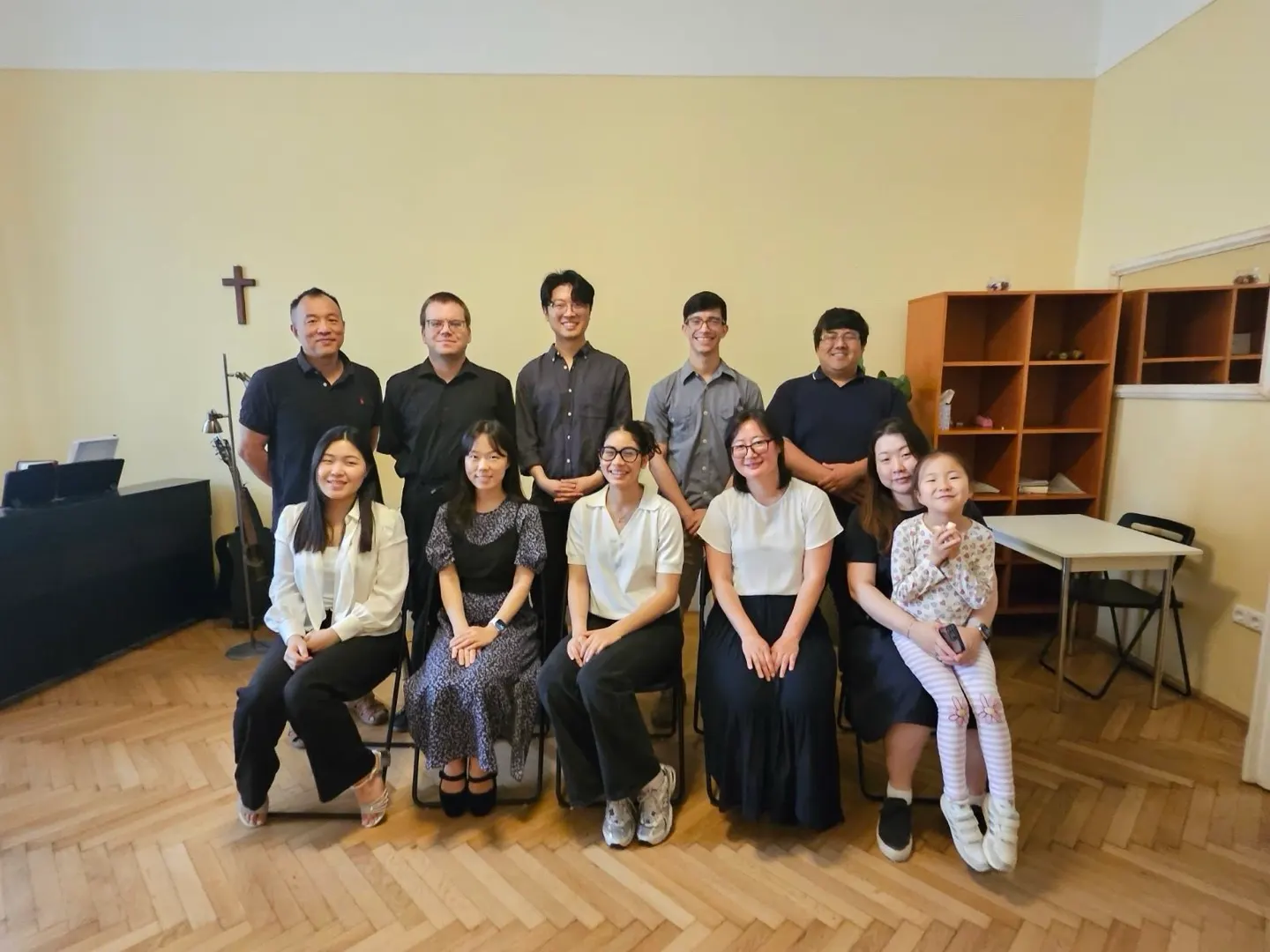
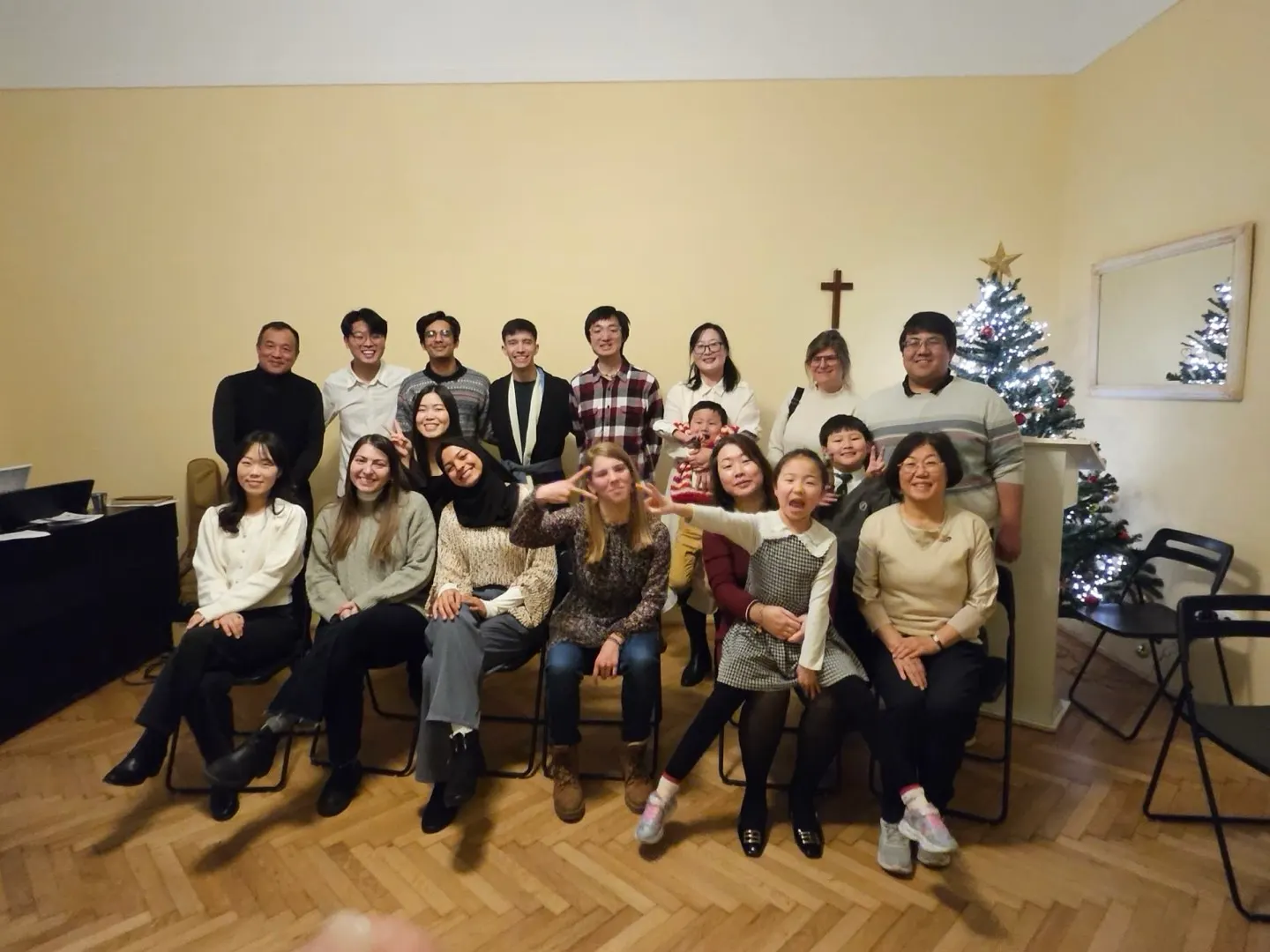
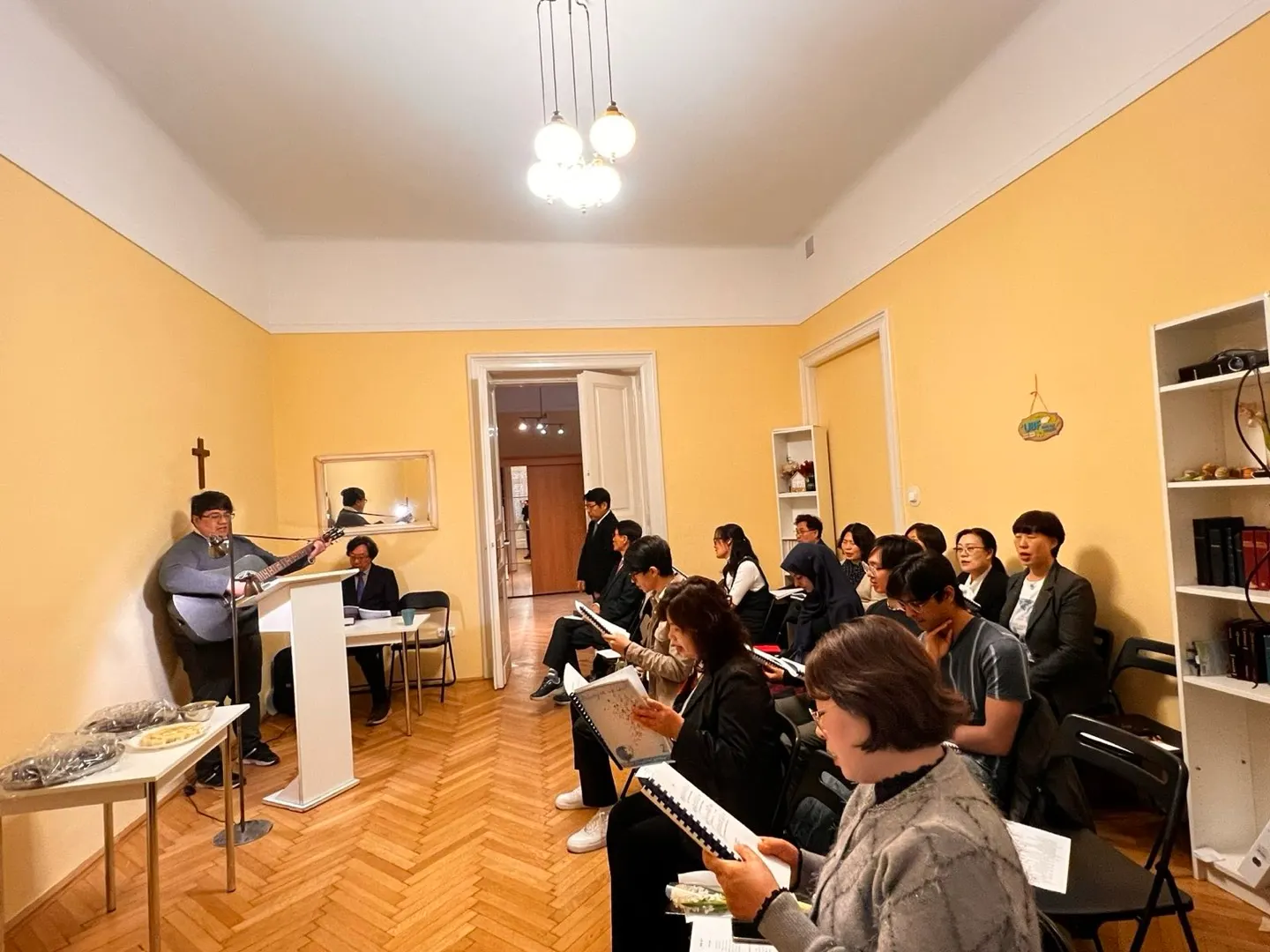
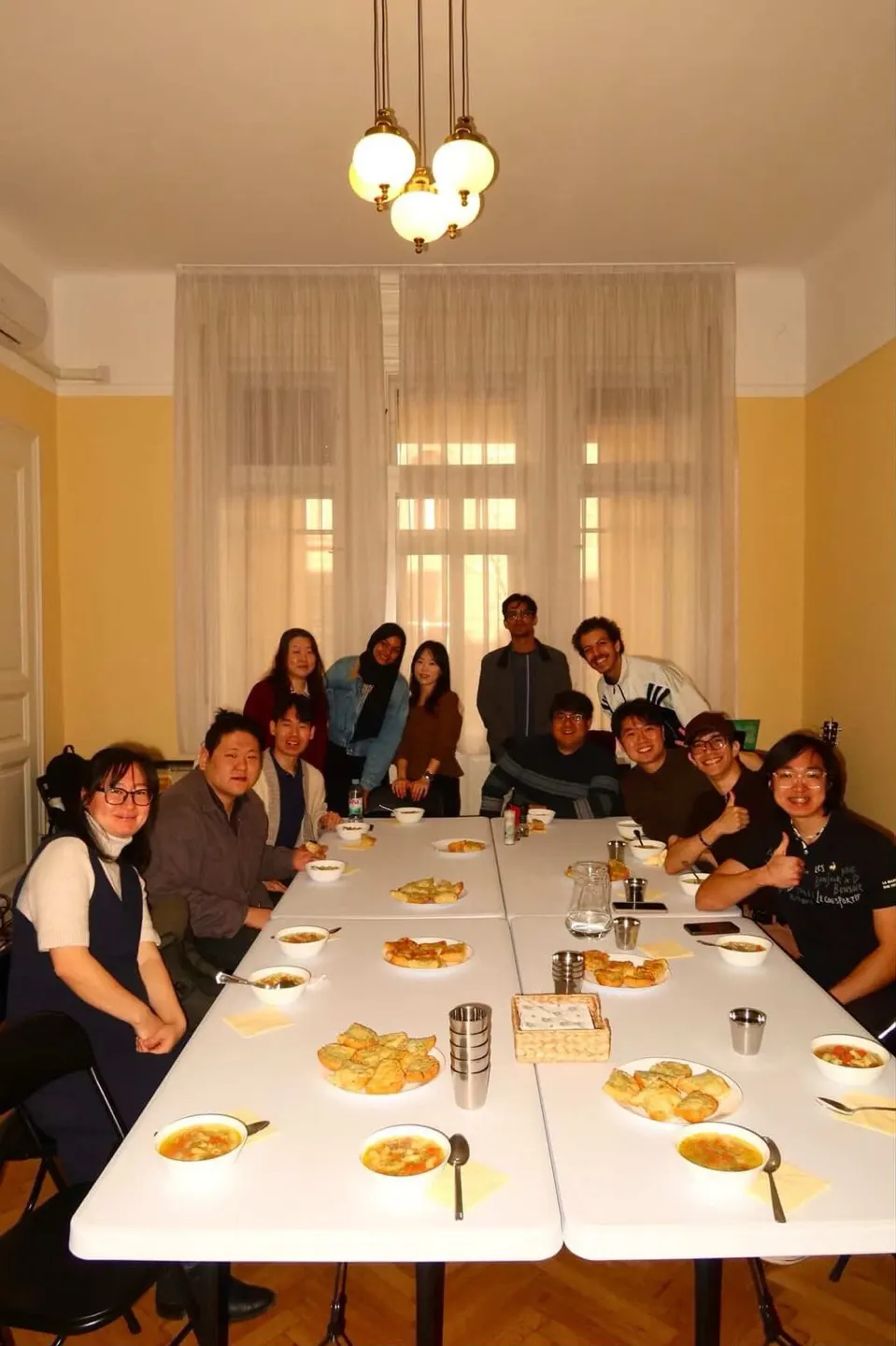
Currently, our UBF Mission has a missionary family of 7 missionaries, 1 2-year-old shepherd, and 2 children. And there are 2 international student missionaries. And the sheep that grow are Ming, Richard, Trang, Nada, Hasan, Tomi, and Jeong Jae. Sister Maria is in Bahrain and is studying with a missionary Rebekah online. English-speaking international students are gathering. On March 8, Ming, Agusto, Trang and 3 people were baptized. We are praying for Hungarian student history. Currently, an average of 15 people participate in Sunday services.
VI. How to become a missionary in Hungary
1. Major Korean conglomerates have established manufacturing subsidiaries in Hungary, making it relatively easy for Koreans to find jobs under local hiring conditions.
* Major Companies Operating in Hungary
1) Electric Vehicle Batteries: Samsung SDI, SK On, EcoproBM, etc.
2) Electric Vehicle Parts: LG Magna, W-SCOPE, Hyundai Mobis, etc.
3) Other Manufacturing: Hankook Tire (automotive parts manufacturing), Samyang Biopharm (medical supplies manufacturing), Celltrion (pharmaceutical manufacturing), etc.
4) Food and Beverage: CJ Foods, Samsung Wellstory, etc.
5) Distribution and Logistics: Hyundai Glovis, CJ E&C, Subwon, iMarket Korea, and other freight forwarding companies, etc.
- A large number of partner companies of other major corporations are also expanding into Hungary
* Major job search sites (set the region to Europe - Hungary)
1) WorldJob www.worldjob.or.kr
2) Saramin www.saramin.co.kr
3) JobKorea www.jobkorea.co.kr
2. You can receive support for overseas employment and local language study through the Shinhan GYC program.
Applications are accepted between June and July each year; please check the Shinhan GYC website for details.
* Website: http://shinhanyc.com/
3. It is also possible to enter Hungary as a missionary through self-employment in industries such as lodging and food service.
Visa Information
1. Korean nationals can enter Hungary visa-free and stay for a total of 180 days within a one-year period.
(90 days within the Schengen Zone, including Hungary + an additional 90 days within Hungary only)
After entering visa-free, you can obtain a visa by securing employment.
* When applying for a work visa through employment, you must secure a position related to your university major.
Example) Economics/Business Administration/Accounting → Finance Department, Management Department
Chemical Engineering/Mechanical Engineering/Electrical Engineering → Production Department, Quality Control Department
1) For related positions - EU Blue Card (4 years, provides a visa for cohabiting partners, renewable)
2) For unrelated positions - Guest visa (2+1 years, no dependent visa, non-renewable)
2. The Working Holiday program is available to adults aged 30 or younger.
3. Language Study/Study Abroad: You can apply for a visa for the duration of your course through university-affiliated language schools or similar institutions.
VII. Hungary UBF prayer topics
Key verse for year 2026: John 13:34-35: "A new command I give you: Love one another. As I have loved you, so you must love one another. By this everyone will know that you are my disciples, if you love one another.”
1. Raise up 3 Hungarian leaders
2. Allowing missionaries to study the Bible with a single Hungarian college student
3. Let the missionaries continue studying Hungarian
4. May God bless the missionaries materially
5. Let Ming, Richard, Agusto, Trang, and Nada stand as Hungarian co-workers
6. Continue to send missionaries to Hungary
7. So that the second generation of adults will form a family of faith, and the second generation of children will be raised as people of faith.